Finding the signal: What social media data reveals about fan engagement in sports
Social media data has become one of the most important ways sports organizations understand fan engagement. But as the volume of data has exploded, clarity has become harder and harder to find.
June 17, 2026
Cora Masson

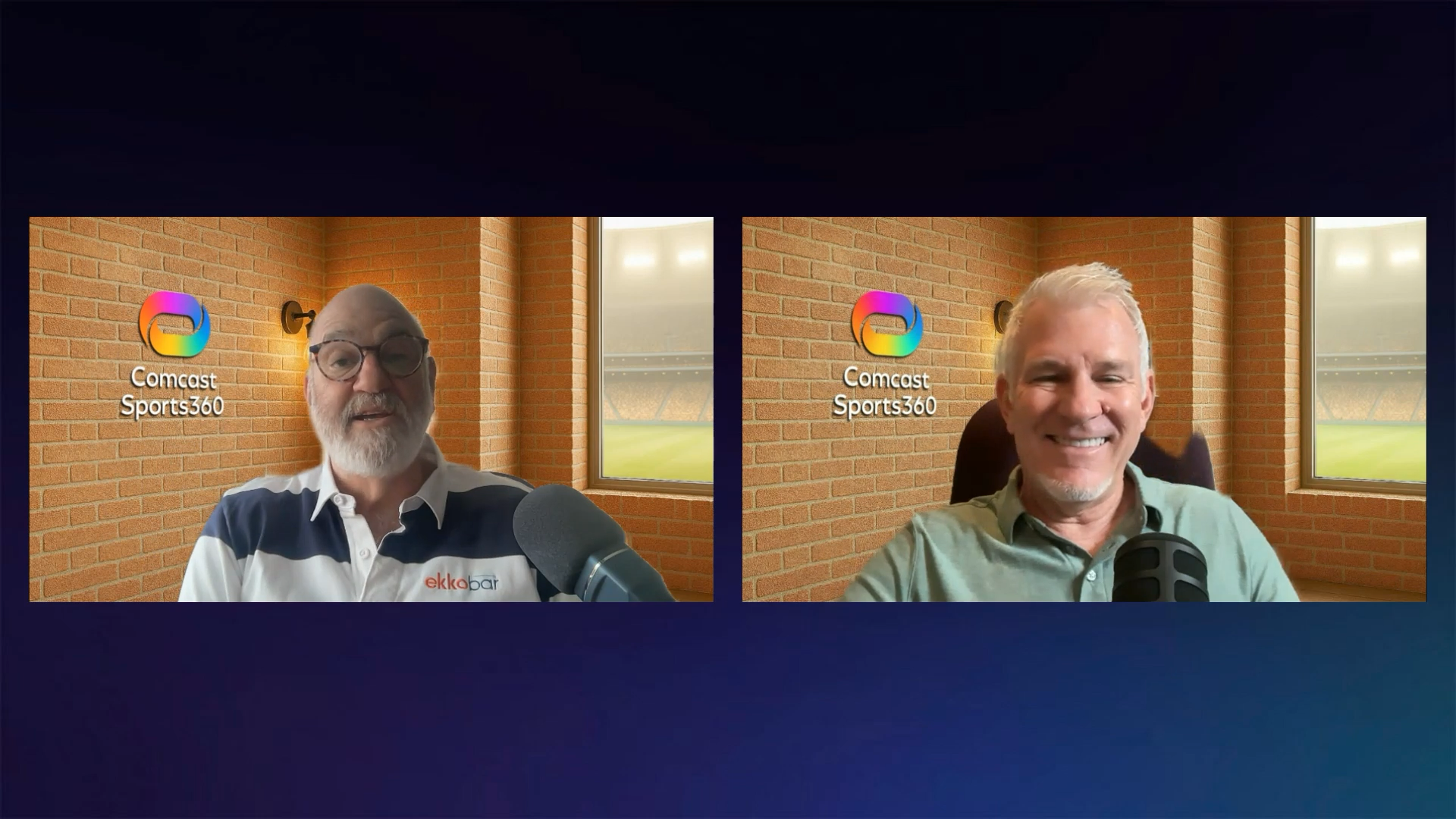
In the first episode of The Evolution of Fandom, Kyle Eichman of Comcast Technology Solutions sits down with Rhys Ryan, CEO and co‑founder of Ekkobar to talk about a problem many teams, leagues, and media partners are quietly wrestling with. As the amount of available social data continues to grow, it has become increasingly difficult to separate meaningful interactions from noise, making it more difficult to build an accurate, actionable view of fan engagement.
“Despite more social data than ever, it’s harder to know what actually matters.”
—Kyle Eichman, CTS
When more social media data produces less understanding
One of the clearest themes in the discussion is that most legacy social tools were designed to count activity, not interpret it. Likes, follower counts, keyword mentions, and surface‑level sentiment are common social media metrics that can be useful indicators. But on their own, they rarely answer the questions executives need to make decisions:

- Why did this resonate?
- What changed fan perception?
- Did this actually influence behavior?
Ryan points out that in today’s environment, volume can be actively misleading. A large jump in conversation may look impressive on a dashboard, but that activity often includes automated posts, bot amplification, or low‑value repetition. Without the ability to filter and contextualize what’s happening, teams can end up optimizing against numbers that don’t reflect real fan interest.
Identifying authentic fan engagement in a sea of synthetic content
The challenge is compounded by the rapid increase in AI‑generated content across social platforms, particularly in sports, entertainment, politics, and other high‑visibility categories. Ryan shares an example from a national sports organization that saw 41,000 posts during a tournament weekend. Once automated and synthetic content was removed, only about 1,000 of those posts represented genuine fan conversation.

Real fans express preferences, frustrations, excitement, and loyalty in ways that can inform everything from content strategy to sponsorship valuation. Automated content does not. Without tools to identify and prioritize authentic signals, organizations risk making decisions based on activity that looks impressive but carries little insight.
“51% of all social media posts are AI bot generated... If you don't have the right technology, the right systems and the right people who understand how to actually look at the data the right way, you're never going to find your true signal.”
—Rhys Ryan, Ekkobar
Social media is now a team sport
Eichman frames social media as a connective layer that runs through the organization, linking fan behavior to enterprise‑level decisions. It influences sponsorship decisions, brand alignment, broadcast strategy, athlete relationships, and the overall fan experience. When that story is fragmented, value is lost. When it’s aligned, social data becomes shared intelligence. The question is no longer “How did this post perform?” but instead, “What is the conversation telling us about our business?”
“What happens on social doesn’t belong exclusively to marketing.”
— Kyle Eichman, CTS
The second screen opportunity
Fan behavior, particularly among younger audiences, is no longer centered on a single, linear viewing experience. Highlights, stats, short-form clips, and real-time social media conversations now sit alongside live gameplay, shaping how fans follow and interpret what they are seeing.
For sports organizations, this increases the importance of understanding how fans engage across environments and linking those signals back to owned experiences. Bringing second screen behavior into the broader view helps extend engagement, inform content and sponsorship decisions, and build a more complete picture of audience interest beyond the game itself.

“The second screen is where fan curiosity and emotion are most visible—it’s where they react, ask questions, and connect in real time.”
—Rhys Ryan, Ekkobar
Turning fan engagement data into action
Perhaps the most pragmatic takeaway from the episode is that insight only matters if it leads to action. Ryan points to several ways social intelligence is being applied across the business:
- Evaluating sponsorship fit
- Understanding athlete–brand alignment
- Assessing whether investments resonate with fans
In each case, the value doesn’t come from having more data, it comes from having data that reflects real human behavior and can be applied quickly.
As social media data continues to expand, the ability to filter signals from noise will shape how effectively organizations understand and engage with their audiences. For a deeper look at how teams can put this into practice, listen to the full conversation in Episode 1 of The Evolution of Fandom.