
Most sports organizations built their fan strategy around the people in the building. The audience that follows the team on social, watches on broadcast, and never buys a ticket is far larger, and most teams barely know who those fans are.
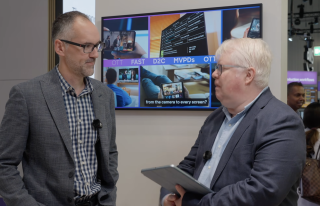
In this episode of The Evolution of Fandom, Kyle and Miheer dig into the gap. They talk about ghost fans, why fan interactivity is different now, where OTT experiences stopped short, and what AI actually changes for teams, leagues, and the sponsors who fund them. They also take a clear-eyed look at what's overhyped, and where to invest over the next five to ten years.
What you'll learn:
- Why "ghost fans" (also called invisible fans) are the biggest untapped audience in sports, and why teams need to know them
- What changed about fan interactivity, and why owned platforms matter more than rented social channels
- What first-generation OTT experiences missed when they put TV on mobile without adding interactivity and community
- How AI can orchestrate the workflows that run in silos today, from broadcast and push notifications to social and loyalty
- How personalization opens new sponsorship inventory, including emotion-based and contextual campaigns
- What to fix first: tech stack integration, identity, and unified first-party fan data
Listen on Spotify:
Prefer to read? Here's the full discussion:
Hi, I'm Kyle Eichman, sports market director here at Comcast Technology Solutions, and welcome back to the Evolution of Fandom. Today, we're asking one simple question, what do fans actually want? From personalized experiences to interactive content and stronger community connections, fan expectations are continuing to evolve. Joining me today is Miheer Walavalkar, co-founder and CEO of LiveLike, to explore how organizations are building digital experiences that keep fans engaged before, during, and after the event. Miheer thanks for joining me and welcome to the podcast.
Kyle, thank you for having me.
You bet, you bet. I'm super excited about this one and the first order of business, love you to spend a little bit of time introducing yourself and give us an overview of LiveLike.
Happy to. Thank you for having me on the podcast. So I'm Miheer Walavalkar. I'm the CEO and co-founder of LiveLike. We are an audience engagement platform. We provide a lot of focus on loyalty, community and gamification, working with media, sports and entertainment customers around the world. The idea is for, we want to drive the future of fandom. We want to help our partners engage their fans better, but more importantly, monetize their fans better. There's a lot that we have learned from big tech in terms of how to personalize experiences for their audiences, how to drive more of a lean-in experience.
And we're trying to bring the best of what the big tech world has to offer to the world of sports media and entertainment.
Right. That's great. And super good intro. And we're going to jump right into some questions. And this first one is kind of my favorite thing and it goes back to a phrase that we hear when we're talking to teams and leagues and we call them ghost fans. I think the industry calls them invisible fans and everybody uses it and everything. So from your perspective, what does that really mean and why is that so important? And why are you and I hearing that when we go have meetings with everybody and start talking about fandom?
I think one of the main reasons why, I mean, if we think about people that are... Let's take a sports team, for example. Most of the focus for the last, how many ever decades has been focused on people that attend games, that buy tickets.
Right. Right.
And we know as sports have become more global and as fandom has evolved over the years, everyone's not coming to the game. In fact, probably less than one to 5%, give or take, depending on the sport and the league and the location, are actually fans that are in the stadium. And so how do you tap into those fans that are fans that follow your team on Facebook and Instagram or Twitter that watch your sports on broadcast media, but they never come to games? And how do we get to know those fans better is a really important part of any D2C business.
If you want to try to monetize those fans better. Frankly, even fans that come to the stadium, what are they doing when they're not coming to the stadium? The rest of the time, how do you keep them engaged in the middle is actually the trick. And you can actually extend that analogy not just to the world of sports, you can take it to restaurants, people that are only coming... If you only know about people that came to dine with you three times a year and you engage them during those three times, what about the rest of the time?
Parks and recreation. I mean, you can extend that analogy to pretty much any business. And so that invisible fan and getting to know that fan is such an important part of operations going forward in my mind.
Yeah. I think, and you're right, teams like historically were guilty of focusing on the 17 or 70,000 people in the building. I was at an innovation summit like four or five years ago over in Barcelona. It was one of the Premier League teams were holding it and I was sitting at a table with two or three of the folks there. And one of the guys said something that kind of has stuck with me and I won't say which club it was, but he was, "I don't really care about the 70,000 fans in my building.
I know who they are. They're always going to come back." He goes, "My play needs to be global. I'm worried about and want to interact with the six million or eight million, some crazy number of fans that will never ever set foot in my venue." And that's kind of where... Four or five years ago, he said the future of the industry was going. And I think, to your point, everybody else is finally caught up. Everybody's trying to figure out how do I become a global brand? I'm really good at doing stuff in the building.
I need to be way better at doing stuff outside the venue or even outside market. I think you could even take it a little bit further and say you need to become better at engaging folks that don't even live within your metro area or whatever it may be. So interesting term, invisible fan, ghost fan, I love both of them. So let's take that invisible or ghost fan and move it over to fan interactivity.
There was one of the notes that was sent over to me was somebody said, "Fan interactive, interactivity isn't new." If you look at fantasy sports and phone-in radio and message boards, but what do you think has changed to make this moment different?
I think a lot of the interactivity was happening on third-party platforms. I think that's probably the most important difference. I mean, if you watched American Idol 20 years ago, go to Twitter and vote for your favorite or text 5555 with your favorite artist or whatever.
Yep.
The main part here is as apps and websites and digital touchpoints have gotten better, there is a way for you to engage your audiences on your own and operated platforms. You just get to know more about who they are, what they care about, what their likes and dislikes are, how they engage, their patterns, which allows you to then personalize those experiences for those fans. I mean, historically, all the interactivity was driven off of broadcast. Someone on the TV would tell you, "Go do this." That now has evolved into push notifications, in-app notifications, "For you" tabs like Twitter has or whatever.
And so to me the evolution of the touch points and the mobile screen becoming the primary interface that you as a human are using all the time, and how do you reach those fans on that interface that's the key differentiator as far as I'm concerned because that real estate lends itself to more forms of personalized engagement.
Yeah. And I think it... I was in a conversation, it may have actually been with Alex from your team and we were talking about how teams and leagues are guilty of using rented real estate. And I think that ties right back to your comment. Like they're guilty of leveraging, pick your favorite social media channel or whatever it is. It's like, well, that's all rented space.
And the other part that's interesting about what you said and the touchpoints and everything is if you look at the old school RSN model, the teams and leagues are guilty of giving away one of their most important pieces of content, which is the live broadcast to somewhere where it's just rented space and how do you interact with that and everything. So to your point, bringing everything back to the interactivity needs to occur on screens that the team or the franchise owns, "Whatever you define that are more in control." So I mean, I think it's all shifting and you're spot on where you need to control kind of everything you do.
And we talk a lot about ecosystem and what you do within your ecosystem and how teams can be better doing that and everything. So spot on there.
I mean, 20 years ago, if you think about it this way, I mean, RSN business was a very good business. I mean, it was a cash cow for as long as between in the 90s and 2000s and maybe even up until a decade ago until like Fox sold their RSNs to Disney. At the time it made a lot of sense, but once cord-cutting started happening and once consumption started moving off free to air or cable or set top boxes to mobile and the small screen, then you obviously have to change how you engage.
You can't just put TV on mobile and expect the patterns to exist the same way. You can't charge the same amount of money. Your costs have gone up. I mean churn risk is so much higher, like in the past, once you had Comcast, you had Comcast, you were not switching out, you know what I mean? Unless you moved houses. Today, that's not the case anymore. You really have to work hard to win the business, you win your customer's business. And so user experience and growth management becomes such a key part of any daily operation at any company and now.
So, with that, with the evolving landscape, obviously the business model has to evolve as well. And I think that's when 15 years ago, none of us would have been going to our partners and saying you're giving away your real estate. They were making billions and millions I mean, in rights. But it was a great business at the time. It's now that you have to think about how do you shift with the times.
Yeah. Yeah. It's super easy to take a big check and not worry about it. Especially when you have bees in front of the number or behind the number.
Correct.
Yeah, exactly. Everything's changing. So fandom, I think we've established that fandom is changing clearly. And it shifted from, I guess what I'll call passive to participatory. And when you think about passive, that's, like you said, 15 years ago, somebody grabs their snacks and they go sit down in front of the TV in their living room and they watch sport XYZ for three hours, four hours, whatever the window is. And that's what it was. And I think that from a definition of passive, that's probably pretty good and pretty sound.
But when you think about how organizations have changed and what they have built in response to that changing pattern or changing fandom, what do you think they got wrong? Because you sit right at the point of the new stuff. What are they doing wrong?
I don't think it's necessarily as much as what they're doing wrong as much as what they're not doing. I think a lot of digital OTT experiences have primarily been about whatever was on mobile, let's show it. Whatever was on TV, let's show it on mobile. I mean, that was like, to me, OTT 1.0 was everything that you could see on broadcast, you can now see and more, you can see more. So the focus was entirely about content, which let's face it, ultimately is what fans are paying for. So I get it.
But with that, the mobile medium, the digital medium allows you to do a lot more than the broadcast medium ever allowed you to do. And I think that we have not, like most organizations haven't done that or didn't do that in the past, which was layering on interactivity, layering on community. We know your fans are talking to each other on Reddit, on WhatsApp, are engaging with random communities on Twitter, but that conversation's all happening outside your purview. Bring it inside your platform. The digital medium allows you, allows for it. Personalization, we know with TikTok and Instagram reels, like personalization drives stickiness.
One-to-many experiences work, but one-to-one experiences work even better. And we have the opportunity to now start driving personalization, especially with AI in the mix now. The cost of driving personalization is going down. The scale at which you need to operate was not possible with fully manually operated teams. AI makes it possible now. And so essentially what I would say hasn't happened is that we haven't leaned into everything that the new medium has to offer. And that's what organizations such as yourself and us are trying to bring to our partners.
Right.
Personalization, localization, interactivity, community. It drives stickiness, it drives retention, it reduces churn, it drives incremental transaction commerce. There's so much that comes from it.
Great. Great. So one of the questions I had buried in my note cards was the obligatory AI question. I usually try and avoid it as much as I possibly can because it's just a buzzword. And when you really dig into it, most folks aren't doing anything in the AI space, but you said it twice. So I'm going to bring it up to the top and I'm going to say if you look at AI and you look at the buzz, especially in the industry, I think most of the focus for it is on what I guess I'll call content generation.
I think you even mentioned in the notes you were talking about, see what did it say like a poll or draft a post or do that. So talk a little bit about LiveLike's approach to AI. How you are integrating that capability or technology into the product offering you're bringing out and how it's on... Because I really think it's on the cusp of changing the way teams do a lot of the things on membership and loyalty and interactivity and everything.
So not to have you sit here and plug your company, but give me your overall philosophy and how you all are focusing on leveraging AI because again, I think it's super unique and what makes you all very different.
I appreciate that. And look, I wasn't trying to bait an AI question, but...
It worked out though.
We're obviously very passionate about it. And I think you've probably... Everyone's exposure to AI today has primarily been on ChatGPT or Claude, but it's mostly been on chatbots. The real shift in AI, or rather the big uplift universally in AI has happened once enterprises started adopting AI in terms of productivity and coding and building agentic workflows. And that's where we're focused on. Our business has always been about helping our partners do better. Our partners being teams, leagues, broadcasters, et cetera, operators essentially.
Right.
In the beginning, it was we provided you the tooling so you could build better experiences. We then evolved into not only are we providing you the tooling, we're also providing you solutions out of the box, whether that's an arcade library of games, whether that's built-in community experiences, whether that's built in Duolingo style gamified rewards programs. And now we are providing you the orchestration layer to operate those solutions and those tools because the biggest shift is going to be when people start doing what they were doing, but 10xing it in terms of how efficiently are you launching new products, how well are you running growth campaigns, how seamlessly are you running multiple workflows orchestrated?
As an example, and then I like to use this example because it simplifies it, no one really understands the complexity of what happens when sports are being covered. Let's just take an example, the Eagles scored a touchdown. Think about all the workflows that get triggered from that one event on the field.
Right.
And I'm sure I'm going to miss it. This is not all encompassing. You have a broadcast replay, they're going to show the replay, the commentators are going to talk about it, they're going to analyze the play. You have a push notification onto your phone that says, "Go check out this replay or this touchdown." Your fantasy game is going to update in terms of scores and data fields. You are going to get a separate post on Instagram, Twitter, a discussion focused post on Reddit. You're going to have a live blog being updated with play-by-play that's being updated with some color commentary around it.
Each one of these things that I just described are probably in some shape or form operated in silos today. Different teams are running the broadcast workflows, the broadcast graphics, someone else is running the social media workflows. The growth team, the marketing team is probably managing push to the users. We haven't even talked about personalizing the push. Everyone is getting the same push notification. But what if I'm not an Eagles fan? How do you make the same event reach me with a different take on it? I can't believe they scored again in the fourth quarter versus, I can't believe we scored again in the fourth quarter.
We are winning again. This is the fifth time in the last seven games the Eagles have come from behind. All those things are operated in silos. And the promise of what we're doing, what AI has, and or really only possible because of AI, is that we are orchestrating these workflows. So one central engine can run all those workflows. Now, that is an efficiency play, but it's also an incremental productivity play. What are the things that you were not able to do before that you can now do because it's centralized? That's where personalization comes into play.
And it becomes really interesting conversation when you start thinking about orchestration in an entire media workflow, not just on digital where LiveLike has historically operated within... We've been operating within the digital and the media work and the marketing workflows, the growth workflows, so to speak. But there's communities, there's social media, there's broadcast, there's ticketing. If you have, the power of personalization and AI orchestration, let's assume your team scores a touchdown and you want to sell a sponsorship opportunity for your favorite food delivery app out there, and you get a notification that says 10% off if the team makes a comeback in the next 30 minutes.
There is a lot that can be done now that was probably not possible before with the power of AI. And when you multiply that across the number of events that are happening in one game across the league, across the globe, that's where the power of what AI has to do, to me, really comes into place in that orchestration.
Right. Great overview and everything is... To me, that's like probably the single best descriptor of how you effectively and efficiently use AI within your business. And it's... I was on a call right before the podcast with another partner group and we were talking about the evolution of the entertainment district. Like the old school was you had the venue, you manage the venue. And you look in North America, I think there's something like eight or nine, what you would call large-scale entertainment districts either in the planning phase or really close to shoveling the ground.
And you talk about all the touch points within those and how do you coordinate messaging and experiences across the... Maybe even use the word enterprise. It's across an enterprise versus just in building. And it goes back to what you and I talked about earlier, where these are global brands. It's not just in venue anymore. It's just not in market, it's global. And now you even look at the physical plant they all play in and it's much different.
We were talking about, well, how do you orchestrate your fan surfaces and your visual boards and all of those things across the entertainment district and imagine the breadth and depth of messaging that you would need to push out there to all of your segments and sub-segments. And you're right, you hit it on the head. Pro sports teams are guilty of operating in siloed environments. That's kind of the way it's always been. And you lay that footprint out in front of them right now and you say, "I want you to be able to push messages multichannel, multi-location, multi-segment, personalized and everything.
How are you going to do it?" If you don't have AI and the logic behind building those processes and those workflows, I literally don't think you can do it.
I don't think you can do it. You definitely cannot do it at scale. You can probably do it as experiments, run AB tests, see what's working. Is this type of message tone working better than the other one that have been platforms out there? And I'm not talking about with LiveLike's AI. I'm just saying generally, Gen AI allows you to do that because it's not just deterministic thinking, it's probabilistic as well. And that's where the generative side comes into play. Experimenting with different tonality, different messaging, different surfaces, you cannot have it in a completely rules-based, regimented manner.
You have to leave some room for creativity in there. And that's where the reasoning models come into play.
Right. So do you think if you look at AI and the capabilities behind it and the orchestration and the flows you're building, what kind of a... As I always go back to sponsors and what kind of sponsors are going to be interested in this and are there new and unique things that we're doing there? Do you think a team or a league leveraging your kind of technology and the power of AI, what's that going to do to the sponsorship space, do you think?
I think you're going to be able to do a lot more contextual advertising and sponsorship. Historically, and I'm not by any means an expert in the world of sponsorship because that's historically not been an area that we played in as often. But I think you can run different types of campaigns. One, I think you can expand the surface area and real estate and inventory essentially of what you can sponsor because before, most of the sponsorship was tied to brand marketing and potentially ads in the content, like pre-rolls, et cetera.
Exactly. Yeah. Yeah.
Today, you're increasing that surface area by layering on more or different types of experiences on top of it, whether it's in interactivity-based experiences, whether that's community-based experiences, whether it's based on personalization. What types of ads do you want to show different people in different locations based on their level of fandom, their age and demographic information? So I think there's a lot more you can do. You can have emotion-based sponsorship. If there's a comeback in the game, there's one type of an ad campaign. Even the ad that you show for the same brand could be tailored to a losing situation--
Exactly. Exactly.
Versus a winning situation, a comeback versus a blowout. I'm just thinking a little bit broader. And again, like I said, it's not my core expertise and my world, but I do think in general, you can start going more towards performance marketing and not just core brand marketing as a thing. Yep.
Yeah. Yeah. No, that's perfect. Exactly. And we were chatting with the president of a, I'll call it emerging or startup league on the women's side.
And we kind of had the same conversation and her comment, which I thought really stuck with me with regards to sponsorship, she's like, "You look at new leagues and new technology." And she says, "You can almost throw the playbook of sponsorship out the window because you're starting to work with a green canvas." And she goes, "And what we're finding is we're starting to engage with companies that are looking at pro sports sponsorships that never would have." For those very reasons you can build a sponsorship category or a sponsorship vertical and all the other words they use, something that's very unique to that company that would never would have entered.
And I could give examples, but we'll skip on from that. So I was taking what she said, then I'm like, "Yeah, but this is all good and fine. How do you execute it?" And that's where I roped in the whole AI workflow and everything, because you're set and is the brains of the organization, so there'd be no reason not to rope all of that in and literally do things that a team would never be able to do.
Completely. I think you're able to drive cohorts in a different way. I think you're able to drive segmentation and personalization in a different way. Yeah, I think it leaves... I do think there's going to be a lot of innovation in the next three to five years on this as teams become more and more proficient with using AI. And I think it's also going to leave a lot of room for creativity. And I don't think this is going to be happening autonomously. I mean, sports is such a...
There's so much creativity that comes in terms of the broadcast productions and the organizations that sort of run their businesses around sports, whether it's the ads and brands, the kind of sponsorship that messages that come in, the kind of activations that are happening. I do think there is a lot of room for AI's applications in there.
Yeah. Yeah, exactly. Exactly. Great point. So talked a lot about AI. I think there's a lot of over-hyped ideas flowing through the sports world. You could probably throw AI into that conversation, but what in your opinion is the most over-hyped idea in fan engagement right now? No pressure.
This is literally the first thing that comes off the top of my head, not necessarily. I might change my answer if I thought about it a little bit more, but I do find... My world, my background, LiveLike first started as a virtual reality company.
Oh, really? Interesting. Interesting.
Yeah. We were one of the first companies out there that were live streaming content in virtual reality. I mean, we literally did everything from massive global soccer tournaments across every major brand that you can think of, to American football games across every major brand that you can think of, to basketball across every major brands you can think of. And we live stream these games in immersive headsets. And so when I say what I'm about to say, it comes from a place of knowledge and not ignorance. I think the idea of immersive entertainment, immersive streaming is extremely over-hyped.
I don't think audiences are ready for it. I don't think the form factors have evolved fast enough to support stickiness and repeat consumption and really anything to go beyond the initial novelty factor. And that also sort of lends itself to, like, these really... I don't know. I mean, to me, they sound, look really gimmicky AR experiences, like these AR filters and lenses and stuff like that. Yeah, that's probably what I would say is the most over-hyped in terms of fan engagement. There's such niche offerings.
Yeah. I think that's fair. And I probably wouldn't have come up with that one, but when you're sitting there talking about it, I'm like, yeah, gosh, you know what? you're right. You look at... I was part of the crew that built Golden One Center, and we spent a lot of time looking at AR and those kind of things. And when we were doing seat tours and those, we brought that in and it's like, oh, well this is the next greatest thing and what's it going to look like? Are you going to have everybody sitting at home wearing goggles and they're going to be in the owner's seat checking everything out?
And you go down all these crazy tangents and none of that ever happened. And it's like if you look at teams now, I think you're right. It's a niche thing and there's like two or three things that maybe you can use it for, but it's not the end all be it all and it was not... To your point, all the hype that surrounded it, here you are X number of years into it and you don't really even see it that much anymore. So I think you're--
I think you made a good point. I don't want to paint the whole thing with the negative thing, but I think AR in form of retail, shopping, commerce, I want to see what the furniture might look like in my apartment or feel it or how would I look with this haircut? I think there are applications, 3D tours, like fly by tours in a new apartment or as you're trying to sell new seats and PSLs in a stadium, I think there are applications, but they're not scalable. I mean, my point is they're more activations rather than repeatable fan engagement opportunities.
And that's really what I'm referring to.
Yeah. Yeah. No, you're right. It's one or two use cases. It's not, again, I think I said it's not the end-all, be-all, and you're not going to inject it into everything you do everywhere. And I think when it first came out, it was all these brands like, "This is the greatest thing you're going to do this and this and this," and it just never happened. So that's just one of those, it's almost like a fad. It faded out and the younger generation isn't adopting it like they thought they would. So we move on or we pivot to the next thing.
So let's move on to... I almost call this the advice section of the podcast. So if you were a league or a team and you were advising them on where to spend money over the next, let's call it five to 10 years, where would you point them? Where would you say, "Yes, you need to double down over here."
I think if I were a neutral independent consultant, my answers might be slightly different, but as the CEO of LiveLike, my answers are going to be a little bit more self-serving and biased. But look, I mean, rather than even self-serving and biased, my area of expertise is on the technology side of things. It's less so on the commercialization side. Build entertainment districts might be the answer, but I'm not an expert on that, so I would not say that. But for me, I think investing in... Everything that I said before about AI and orchestration starts with having or modernizing your tech stack.
So in order for me to orchestrate different workflows, different systems have to work together. I need to be able to pull from your data warehouse. I need to be able to send something to your MarTech stack. I need to be able to pull from your MarTech stack. I need to be able to integrate something with your broadcast pipelines or on your digital or your mobile app. So all these things have to be interconnected because at the end of the day, agents speak to each other through technology. They can't just call someone and say, send me the CSV file and upload this document so that I can...
It has to be seamless. And so if you truly want to reap the benefits of what AI promises in terms of transformation and orchestration, those systems really have to be in place and including the data. The data has to be clean and structured and building customer 360 profiles so that I know that when Kyle is watching on TV and shopping on your website and buying a ticket and buying a beer at the stand or in the stadium, it's the same Kyle, because then I can actually start building a persona and a profile and I can start targeting and personalizing experiences for you.
And so for that, a modern tech stack and making sure that all of those things are interconnected, I think has the potential to really change how you operate businesses.
Yeah. I think I said it at the beginning of the podcast that pro sports teams are guilty of operating in silos. And it's really apparent when you start looking at technology. And not that it's wrong, but I think a lot of teams look at something and say, "Oh, I need that as part of my MarTech stack because eight other teams did it." And it's not intentional. It's a, "Well, I'm a follower. I'm going to do whatever." So then you get these goofy tech stacks or these pieces of tech that are sitting all over the place that aren't...
And quite frankly, some of them are niche players in the pro sports space. And when you look at running a traditional pro sports organization versus running a pro sports organization that has private equity and VC money in it, that's a much different conversation. Because you are now expected based on the capital that you have to run a "Real business" that's got KPIs and metrics and everything. And in order to do that and be efficient and effective, it all goes back to your tech. And everything needs to talk together and you need to be able to orchestrate.
To your point, it does me no good to have an ESP that sits over here that's an off-the-shelf thing, trying to talk to another homegrown CRM system over here. And then somebody LiveLike like you come into the mix, you're like, "Well, look, I've got all this great tech. I can do all these fantastic things for you, but I can't work within your ecosystem."
Yeah. I agree. I couldn't agree more.
I mean, you're spot on. It's like the IT folks and everybody that's running tech needs to take a step back and start building... The word enterprise grade is overused a lot, but to me, that's kind of what it is with an intentional directive to make sure everything works in unison or you're not going to be able to take advantage of AI and all this great stuff you're out there to do and really turbocharge or jumpstart fandom and experiences and all those. And the other piece that you hit right on the head is fan data.
That's the other piece of it. It's a struggle right now to collect all of your first-party fan data and build everything into that true profile. And that's kind of the foundational layer where you need to start because you are going to be only as good as the data that team or franchise or league has. So if you don't have your ducks in a row when it comes to building this data infrastructure and having something clean and operate from, and there's a lot of movement in that space now, but you're right, it's a marathon, not a sprint.
Again, I think that's overused as well, but if you don't align everything as you're building out capability going forward, then you're going to miss the boat. And fortunately--
You would be shocked how many properties don't even have identity and authentication.
Exactly.
How am I going to run a rewards program if I don't even know how to reach the fan? Or like, hey, if the same fan comes from a website or an app and I can't tell they're the same person. So many things that just comes down to the basics. hey, before I launch a loyalty or a membership program for you, I need some sort of an identity solution. I need some sort of a single sign on. And there's a lot of work being done in that space, but in the past, it may not have mattered because I don't need identity.
Now, someone like a LiveLike comes in and I say, "I'm giving you use cases that make identity absolutely essential." So to a certain extent, we're pulling through some of those technologies because they now become more relevant.
Right. And it's from our perspective too, you were talking about data and users and subscribers and all of those. Think about the amount of data. Obviously we do a lot of broadcasts. We do linear, we do DTC. I mean, probably one of, if not the largest company globally that handles that piece of the media business, but there's an insane amount of metadata. There is an insane amount of user data back there that could help everybody build out the profile. But teams have... We talked about third-party and rented and given away things.
Teams have traditionally given all that away. An RSN is not going to share up a little if any of their data that they get on that subscriber base and all that kind of stuff. So now your teams need to become more intentional about where am I getting all my first-party data? How do I put it together? And the other piece I think they overlook is unification. You mentioned it, right? I've got a Kyle that has tickets. I have a Kyle that's been on the website. I have a Kyle that is a subscriber for my local broadcasts.
And you may have a database somewhere, some rudimentary database that's got me in there three times. There's no logic to combine everything together. And again, you can't do that and give you the data, then the power of your system is severely limited. So everything just needs to move in unison and there needs to be, I think, more direct strategy on how you build everything out. So when a LiveLike comes knocking on the door, they're ready to go instead of looking at a two or three-year tech runway to get it to the point where you can actually optimize and do some cool things.
So yeah, I think that's spot on. To wrap up the session, I always ask the guests to throw out one sound bite, one thing that if everybody's listening, they could write it on a note card and take it home with them and go, "Yep, this is the value statement I got out of listening to this podcast."
Oh geez. I should have prepared for this podcast. I'm sure you said the question and I did not look at it. I was like, oh, I just have to go in for once. I'm the one answering the questions and not asking the questions. I don't have to prepare. I just have to be myself. To me, applications of AI is thinking day in and day out about how I can use this to solve for use cases and workflows, that's actually the most exciting part. Once we talk to our partners and tell them what the art of the possible is, and then they come up with use cases themselves and ask us like, hey, this is...
I'll give you an example of this. One of my partner was like, "I'm struggling to educate my audiences on what the rules of this match or game or race or sport are, and I'm not able to do it in real-time.
Can you build me a workflow where something happens on screen, my team, my production team instantly gets notified, here is what's happening, here is the synopsis of the situation, real-time, reactionary, so that my team can then drive further workflows from there." That's the best part about what when partners come up with their own use cases and I'm like, "Oh, that's such an awesome use case." Yes, I would love to support you for doing it, but frankly, the way we are building our technology is for you to build that workflow yourself on top of our platform.
People are starting to think about it. So they're just leaning in on that side of things, just making sure that you have the right stack, thinking about what kind of workflows you might want to automate and drive forward. It's going to be a game changer because we are doing it. And I say this not because I'm selling the tools, I'm saying this because we are building our own internal operations the same way now. Like there's so much information that's being diffused across different teams. Sales conversations are coming back to product and project management teams so they know what to prepare for.
There is no gaps. There's no miscommunication in terms of what the client's expectation was versus what was communicated internally. I think there's just that the opportunities are endless. And to a certain extent, a year or two years ago, I was very much a doomsday, like this is going to be crazy. I still think there's a dystopian future ahead of us in terms of... But at least until then, I'm like, I think there's a lot of good stuff we can do with it. I mean, productivity gains are unbelievable.
Yeah. Yeah. I agree. I mean, I think there's a certain level of doomsday stuff floating around and I'm kind of in your ship on that as well, but I think so. So take away back to everybody listening, which is great. It's like AI is more than a word. Start thinking about how you as a sports operator can inject AI into your business and maybe you start with workflow and orchestration. I think that's a great piece of advice. So wrapping up, thank you so much for joining. I mean, this was very insightful and hopefully folks grab some great content off the whole thing.
And again, really appreciate you joining the podcast. Thanks.
Oh, thank you for having me. I appreciate it.
Thanks for listening to The Evolution of Fandom. If you have any thoughts about what you've heard, we'd love to hear from you. Visit comcasttechnologysolutions.com/fandom to get in touch, learn more, or subscribe to the series.
Frequently asked questions
Ghost fans, also called invisible fans, are people who follow a team through broadcast, social media, or highlights but never attend a game or buy a ticket. On the podcast, Miheer Walavalkar estimates that roughly 1 to 5% of a team's fans are ever in the stadium, depending on the sport and market, which leaves most of the audience unknown to the organization.
Teams can reach them on digital surfaces they own, such as apps and websites, where identity, preferences, and behavior are captured as first-party data. From there, personalization, community, loyalty, and interactive experiences keep fans engaged between events instead of leaving that relationship to rented social platforms.
On rented platforms, the platform holds the data and controls the relationship. On owned platforms, teams learn who fans are, what they care about, and how they engage. That knowledge makes personalization, loyalty programs, and new sponsorship formats possible.
AI can orchestrate workflows that usually run in silos, such as replays, push notifications, social posts, fantasy updates, and live blogs triggered by one moment in a game. Centralizing them lets teams personalize messages at scale, for example sending different notifications to fans of different teams. People still guide the creative.
They need a modern, connected tech stack, clean and structured first-party data, and a unified fan profile that recognizes the same person across ticketing, web, app, commerce, and broadcast. Identity and single sign-on come first, because loyalty and rewards programs can't run without knowing who the fan is.
AI-driven personalization expands what sponsors can buy beyond brand placement and pre-roll. Sponsors can reach fans through interactive, community, and personalized experiences, with contextual and emotion-based creative that changes with the game, such as a comeback versus a blowout, and a stronger tie to performance marketing.
Miheer Walavalkar, whose company began in VR live streaming, believes immersive streaming and AR filters are overhyped because form factors and audience habits haven't supported repeat use beyond the novelty. He sees AR working for retail previews and 3D venue tours, but as one-off activations rather than repeatable fan engagement.
Passive fandom is watching a game on TV for a few hours. Participatory fandom adds interaction, community, and personalization on top of the content, through apps, games, rewards, and conversation. Organizations that bring that participation onto platforms they own see more stickiness, retention, and commerce.
Please note that the views and opinions expressed by the individuals herein are their own and do not reflect any official policy or position of Comcast. These views and opinions are provided for illustrative purposes only, and Comcast makes no warranties, whether expressed, implied or statutory, regarding or relating to the accuracy of such statements.