Voice, AI, and the next fan engagement surface in sports
In a recent conversation with CTS, Vokol founder Mark Antal described how personalized AI audio could help sports organizations turn fan attention into stronger owned relationships.
July 21, 2026
Cora Masson

Vokol is an AI audio platform built for sports organizations. It creates short, personalized audio segments that teams can deliver through their own apps or websites, using fan interests, team data, and approved brand language to make previews, recaps, event information, and sponsor messages feel more relevant to each listener.
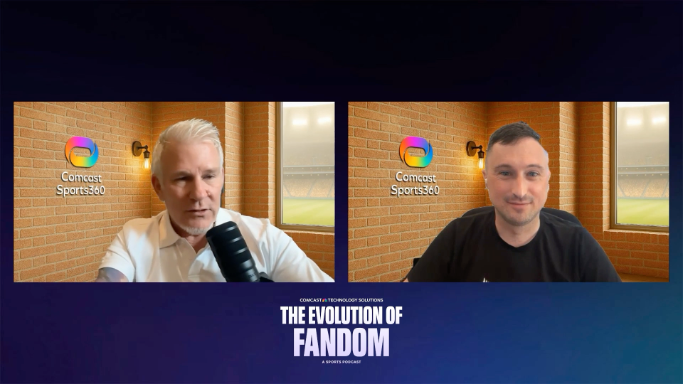
That idea was the focus of Episode 2 of The Evolution of Fandom, where CTS' Kyle Eichman spoke with Antal about what voice and AI could mean for the next stage of sports fan engagement. The conversation centered on a practical question: if fans already spend so much time thinking about their teams, how can teams meet them with content that feels timely, personal, and worth acting on?
Reach is not the same as relationship
For many teams, the audience is already there. Fans follow clubs across social platforms, streaming services, and media channels. The problem, as Antal framed it, is that much of that engagement happens away from the team's own environment. He described those third-party spaces as "rented real estate," where teams may capture attention without getting the full relationship, data, or monetization benefit.
Vokol's answer is to use personalization as a reason for fans to spend more time in owned channels. Instead of serving the same broad preview to every fan, a team could offer audio tied to the player, matchup, storyline, or detail a specific fan cares about. In that model, the app or website becomes useful in the moment, not just another destination competing for attention.
"[Sports organizations] have built massive audiences across social, streaming and third party destinations. But… reach is not the same as relationship.” –Kyle Eichman, CTS
How personalized AI audio improves sports fan engagement
Antal also pushed back on the idea that AI should be judged only by how much work it can automate. In his view, Vokol is actually more like a distribution layer—a “megaphone,” in his words—for creators. Editorial teams still shape the coverage and set the guardrails. AI helps adapt that work for more individual fan interests than a standard preview or recap can cover.
Imagine all the different, customized examples that could be possible. A fan heading to the arena may want event logistics and a few relevant storylines. A fantasy player may want a short recap built around their roster. Someone who missed the game may want the key moments quickly, while the result is still fresh. Audio can fit into those gaps without asking the fan to stop and read.
“We view ourselves as a tool for creators to drive fan engagement and create a new medium through which sponsors can reach an audience." – Mark Antal , Vokol
Trust starts with transparency
The discussion also dealt with trust, an important but tricky issue for an AI product. Antal said Vokol does not try to make its AI audio sound as if it is secretly human. The company does not clone voices without permission, and he tied that position to a broader point about credibility: fans need to know what they are hearing, and brands need to know the experience will not put them at risk.
He emphasized a foundation of opt-in experiences, clear disclosure, and content that follows the same rules a human editorial team would follow. Antal said Vokol trains its systems on each client's brand guidelines, approved terminology, sponsor requirements, and accuracy standards before content is distributed.
That accuracy layer is especially important in sports. Rosters change, injuries shift, and trades can quickly make yesterday's information wrong. Antal's argument was that a sports-specific AI product has to be built around those conditions rather than treated like a general content tool with a sports prompt attached.

Audio as sponsorable inventory
The episode also framed audio as a potential revenue product, not only a content format. Antal pointed to personalized audio with built-in calls to action for ticketing, merchandise, sponsor offers, or in-venue activations. Matching the message to the listener and making the call-to-action clear yielded impressive gains in click-through rate over email marketing.
A prime use case is "know before you go" audio for fans attending an event. Rather than scanning a long email, a fan can hear the information that matters before arriving. Antal also discussed fantasy recaps and post-game summaries as audio moments that can reach fans when they are already looking for a quick update.
"We always talk about eliminating the distance between interest and action... Whether it's ticket sales, jersey sales, or a sponsor activation… about 20% of folks that have listened to our audio have clicked the call-to-action button..." – Mark Antal , Vokol
The live game is still the center
Antal emphasized the live game as the central product and said Vokol is designed for the moments around it. That could mean a pregame brief, a post-game recap, a commute listen, or an app-based update when a fan wants context without opening another article.
That approach gives teams more room to extend the story without competing with the event. It also gives them another way to learn what fans care about through their own channels. Combined with insights gathered from social media and other audience touchpoints, teams can develop a more complete understanding of fan interests and behaviors. Over time, those signals could help teams shape content, sponsorship, and fan experiences with a more direct understanding of individual interests.

Why the full conversation is worth hearing
Listen to the full conversation for a deeper dive into questions many sports organizations are working through.
- Who owns the fan relationship?
- How should teams personalize content without weakening trust?
- Where can sponsors appear in a way that feels useful to fans?
- How quickly can a team turn live data into a story while the story still has value?
Episode 2 of The Evolution of Fandom gives a clear look at how personalized AI audio and voice technology may shape the future of sports fan engagement, especially in the moments before and after the live event. For a deeper look, listen to the full conversation in Episode 2 of The Evolution of Fandom.